Patrick Ogle
  • Movies I have seen recently
  • Books Ive Read 2023-24
  • An Explanation
  • Recent Writing Portfolio
  • Paintings & Other Art
  • History and Current Events
  • My Witty Observations (Humor)

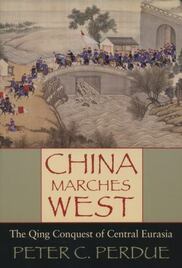
China Marches West-The Qing Conquest of Central Eurasia By Peter C. Purdue

6/27/2023

1 Comment

 
Picture
Yes, yes more history reading. China Marches West--The Qing Conquest of Central Eurasia, by Peter C Purdue, is an exhaustive look at how the nascent Manchu Empire expanded its dominion.

This book was one that bogged me down. Not because it is dull but because it is another REAL history book and it takes time and thought to read it. It is also an important book to understand where we are now in the world, despite the fact it takes place several hundred years ago. This is history for people who want to understand now.

We tend to think of the nation states as they exist now as monolithic things that existed, as is, since time immemorial, even when boundaries change within our own lifetimes. This book tells the story of Chinese, or more accurate, Manchu Quin Empire's, expansion at the expense of the Mongol people. The Chinese are not alone in this conquest/absorption. As they moved west, the Russian Empire was moving east. Caught in between were the Mongol people--specifically the Zunghar Mongols.

At the time these three groups played a game of cat and mouse that included diplomacy, duplicity and warfare.

Perdue meticulously catalogs the motivations of the players making clear that this wasn't "straight line" history. Nothing that happened was inevitable nor were the results all intended by the participants (certainly not the Mongols). Unlike the History of the Arab Peoples this book also gives glimpses of personalities and focuses on the motivation of the "great men" involved-- in some cases we know more about intentions because the men themselves wrote them down.

He also parses official histories an calls out the mistakes, omissions and lies. The end result of China's movement West was the creation of a multi-ethnic nation state that, more or less, exists today.

The book is exhaustive (and a little exhausting) but it is worth the time and effort. Keep in mind the effort isn't because it is written in a dry manner; it is actually quite engaging. It simply includes a vast amount of information.
1 Comment

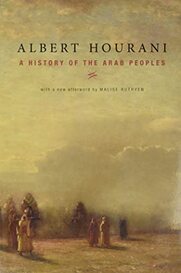
A History Of The Arab Peoples By Albert Hourani

6/27/2023

1 Comment

 
Picture
I'd been meaning to read A History of the Arab Peoples by Albert Hourani, since I read a review of it something like 30 years ago. It is what the title implies but it is a book of its times in many ways.

For one it eschews the "great man (or woman)" sort of history and focuses instead on culture.  In the 1990s history had turned away from "great person" biographies and the focus on war and grand events. It was about the people and culture. This was, of course, an important correction. In some cases it maybe goes too far in this direction of ignoring the kings and queens and such altogether. Some may have that impression about Hourani's book but I do not think that would be accurate. So often Westerner's read about Arabs ONLY in the context of rulers and also as bit players in some Western story. This book will have none of that and it is incredibly detailed and focused.

Within the cultural focus mentioned there is a hyper-focus on the role of Islam.  Indeed the book basically starts with the origins of Islam. History before Islam is treated as prologue and an extremely brief prologue. The one great man there is detail on is the Prophet Mohammad (and if you are going to pick a single towering figure you cannot find one larger). Yet even the great Prophet isn''t really the focus; the beliefs he espoused.

The history of Islam is an enormous part of the history of the Arab people. Especially in the early third of this book the religion is the backbone of what is laid out for the reader. If you come to this book looking for detailed discussions of Arab expansion East or West or the battles fought and the men who led? You are going to be disappointed. In part this may be because Hourani knew that if you start down that road you, out of necessity, start talking about Byzantium, the Sasanians and others. This is a book about the Arab peoples and he shows great discipline in keeping it just that.

He does a great job putting you into the ancient world at various points in time and locations. When the book arrives in modern times it outlines policies again, not getting tied up in personalities. If you start discussing independence and the receding power of Britain and France in too much detail the focus might be lost. It doesn't happen. The book never bogs down in personalities.

This isn't to say that there is anything wrong with biography or history books about wars and significant political events. This just ISN'T any of those and it is valuable because of that. This is also not a "popular" history even though I believe this book was a best seller. This is history history so be prepared to wade through detail and repetition. It is meticulously sourced and indexed. If you cannot bring yourself to read it in one fell swoop it is definitely something you can return to.

Doubtless, in the over 30 years since this book was published there have been changes, revisions, in the history. I don't know enough to tell you what these are but it is true of most books of history. Nonetheless, this is a fantastic place to start in learning about the Arab Peoples.

1 Comment

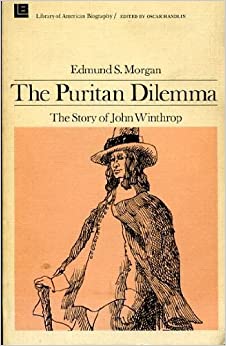
The Puritan Dilemma -The Story of John Winthrop by Edmund S. Morgan

2/20/2023

0 Comments

 
Picture
The truth is this isn't a read but a re-read. The first time I read The Puritan Dilemma by Edmund S. Morgan was over 30 years ago so it counts as new. It is sort of a must-read short book on the Puritans, specifically John Winthrop.

Its treatment of the Puritans is far more even-handed than you will find in most histories. It also places them firmly IN their time, in context, which is important not only when it comes to understanding Puritanism but how it affected America.

With its focus on Winthrop it only brushes upon such notables as John Cotton, Roger Williams and Anne Hutchinson (among others) but that is what is great about it, it introduces you to figures you want to know more about.

It is a brief book, a little more than 205 pages long but it makes great use of every page. There are various longer looks at the Puritans and Winthrop but few get at the man and the beliefs like this one.


0 Comments

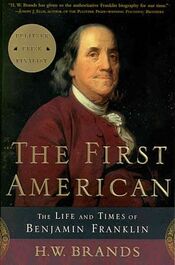
The First American- The Life And Times of Benjamin Franklin By H.W. Brands

2/20/2023

0 Comments

 
Picture
I am a big fan of historical biographies when they are well written and well researched. H.W. Brands', The First American-The Life and Times of Benjamin Franklin, is both.

While I've read many biographies from the era this is the first one I found of Franklin that I found both engaging and focused on reality. You don't need to be fanciful or add to the life of Franklin. He was a scientist, a journalist and printer, a diplomat and a politician and he excelled in all these roles. Without any doubt he was the most widely known and respected American of his time and one of the two most important figures in the American Revolution (George Washington being the other).

This book lays out Franklin's life well but there are some issues that could have been talked about at more length. Slavery leaps readily to mind. Early in his life Franklin owned slaves and was ambivalent about the institution. Later he became an opponent. The book does talk about how he came to believe those of African heritage were every bit as intelligent and capable as Europeans. But for such an important issue the book deals with it only briefly. This is possibly because Franklin's surviving letters and writing on the subject are brief. It isn't as if The First American ignores the issue nor does it deny it importance. The subject just seems to cry out for more detail (and this is often true in Founding Father's bios).

I never slowed down reading this except when there were long portions that included letters to and from his lady friends. Part of his history to be sure! Just not one I find interesting, even if it does serve rather definitively to humanize the subject!


0 Comments

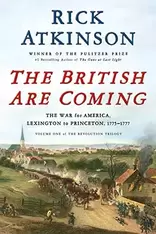
The British Are Coming by Rick Atkinson

2/20/2023

0 Comments

 
Picture
Rick Atkinson is known for his three book history of the American Army in the European Theater during World War 2. Those masterful books tell the stories not just of generals and presidents but common soldiers, often in their own words. I would find myself reading these books as the sun rose; I could not put them down.

The British Are Coming is part one of a new trilogy on the American Revolution. It is another deep dive into what led to the revolution and what followed. He gives a clear view of the minds and motivations of those on high like George III and General Washington.  But it also details the motivations, often via letters to loved ones, of common soldiers and other less prominent people. Where are people more likely to tell their true feelings than in such correspondence?

This book also tosses on the trash heap notions that the Americans were being soundly beaten before Saratoga (which isn't covered in this volume). The Americans took their lumps and made a number of dubious decisions--invading Canada, how they defended New York. Yet, for each of those there was a Lexington & Concord, a Trenton, a Princeton etc.

Often, when the American Revolution is taught, the attack on Canada is not covered. It isn't terribly glorious but it is an important part of the history of the war. Atkinson ignores nothing and I am impatiently awaiting volume 2.

0 Comments

The Ocean Of Churn By Sanjeev Sanyal

1/17/2023

0 Comments

 
Picture
Late in 2022 I read a survey history book on India , India, A History by John Keay. It was an excellent book but any single volume "history of India" is the rough equivalent of a similar book called "a history of Europe."

The subject is vast, especially when the  book starts with pre-literate societies, known only from archaeology. After the Keay book I started fishing around for more Indian History. While I have a basic knowledge of the history of India? It is not particularly deep, nor does it extend much earlier than the modern era.

The Ocean of Churn by Sanjeev Sanyal is more about the Indian Ocean than India but its point is that the ocean here was a cultural link that transcended any single culture. It is also written by an Indian author who dispenses with some of the fanciful notions that even fairly responsible western historians cling to (see Ashoka).  While it isn't as well documented as the Keay book? It raises more thought provoking ideas--even if many of these are tossed out without documentation. It also makes the vast scope more manageable than the Keay book, which is sometimes bogged down in an over abundance of names and place names.

Ocean of Churn also illustrates the horror of European incursions into the Indian Ocean and the depredations of all Europeans who appeared (some, far worse than others). These incursions, when compared with earlier invasions and migrations demonstrate the Europeans were far more deleterious--especially the British.

The book is written in a conversational, almost breezy, style that makes it a quick read. Sanyal also has a great sense of humor. It is also an informative one that points the reader in the direction of further sources, further information.

This book has also been adapted for children.


0 Comments

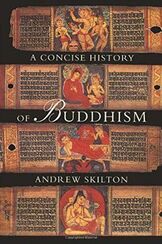
A Concise History Of Buddhism By Andrew Skilton

1/17/2023

1 Comment

 
Picture
I've been making a concerted effort to read more history of India and China. I am not completely ignorant of these ancient culture's history but I am nowhere near as well versed as I am in the history of Europe, Africa or the Americas. I actually started reading A Concise History of Buddhism by Andrew Skilton, in 2022 but I include it here since I FINISHED it this year (early on this may be a theme)

I recently read a book called India, A History by John Keay, which is an excellent survey of the history from prehistoric time ALMOST to current events. After that I went searching for more specific topics which turned out to be more difficult than I anticipated.

Buddhism wasn't really on the radar but I stumbled across this book. What it turns out to be is a short but sometimes mind numbing survey of the various Buddhist trains of thought, schisms and theology. If you do not know ANYTHING about Buddhism this is going to be incredibly difficult to get through. The book is not big on explaining the basics, even basic terminology. It is pretty close to ALL theology so do not expect a great deal of political or personal history.

The book does detail many of the different lineages of Buddhism in an understandable way and there are other times when it gives you a glimpse into appeal of the religion. It also has a chapter on   the reason Buddhism vanished in its homeland of India. It is not a particularly critical history but it does not shy away from the "warts" either. There is a concerted attempt to be even handed between the different sects (for lack of a better word).

I am glad that I read it and  I would  recommend this to people interested in theology. It is interesting in a comparative sense too. When you  look at other religious traditions you see parallels. One thing that struck me is how the biggest world religions all seem to share a trait. Almost immediately after the demise (or ascension ) of the religion's founder there are suddenly myriad interpretations and sometimes outright perversions of the original intent. Buddhism does not escape this (if this book is to be believed).

Keep in mind, this book is written by a true believer and there is no delving into the hinted at hypocrisies and potentially ahistorical interpretations by Buddhist thinkers.

1 Comment

    Author

    This is really to motivate me to read and remember what I am reading. I'd love to hear what YOU are reading.

    The dates are not an indication of when I finished really. I fell behind.

    Archives

    September 2025
    July 2025
    December 2024
    August 2024
    July 2024
    June 2024
    May 2024
    April 2024
    February 2024
    December 2023
    October 2023
    August 2023
    July 2023
    June 2023
    February 2023
    January 2023

    Categories

    All
    Fiction
    Non Fiction
    Year Read 2024
    Year Read-2024

    RSS Feed